Every code below is a real render, not a mock-up of one, and every one was checked with a scanner before it was published. The generator itself makes no such promise for your own codes — it never decodes what it hands back, so test yours before you print it.
The portraits are public domain. Photographs from the plate era suit this unreasonably well: they were lit hard, printed with real blacks, and already carry the tonal separation that one bit per pixel needs.
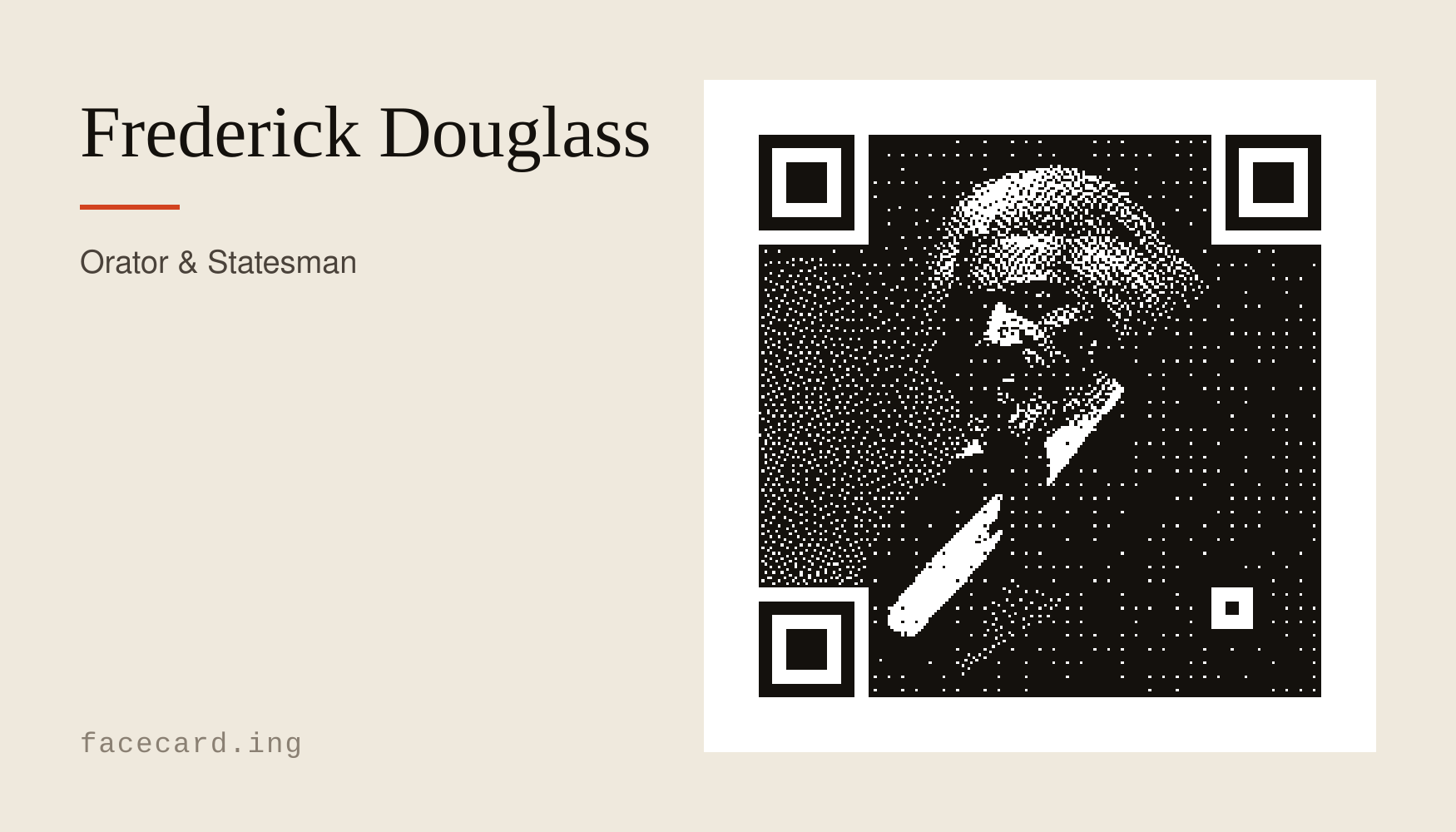
Frederick Douglass, set into a business card. Atkinson dithering, error correction level H.Public domain, c. 1879 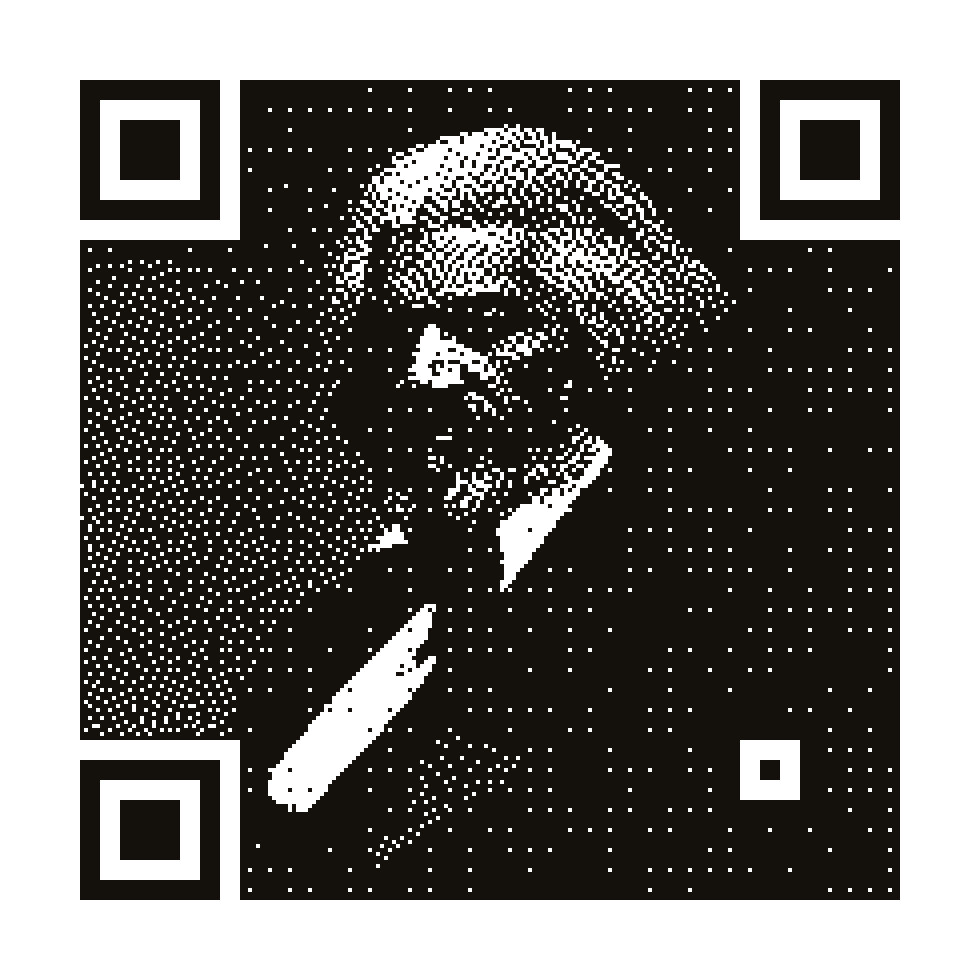
Frederick Douglass, dithered into a version 6 QR code with Atkinson error diffusion at correction level H.Public domain, c. 1879 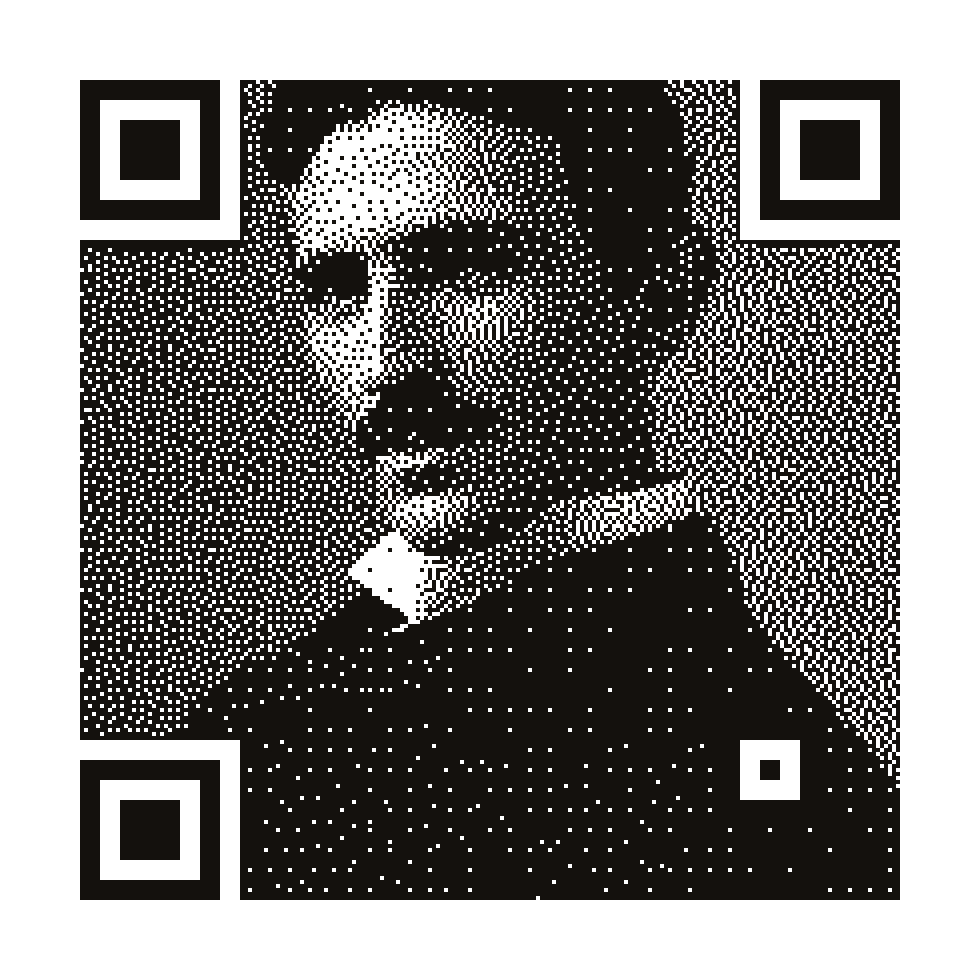
Nikola Tesla, dithered into a version 6 QR code with Floyd–Steinberg error diffusion at correction level H.Public domain, c. 1890 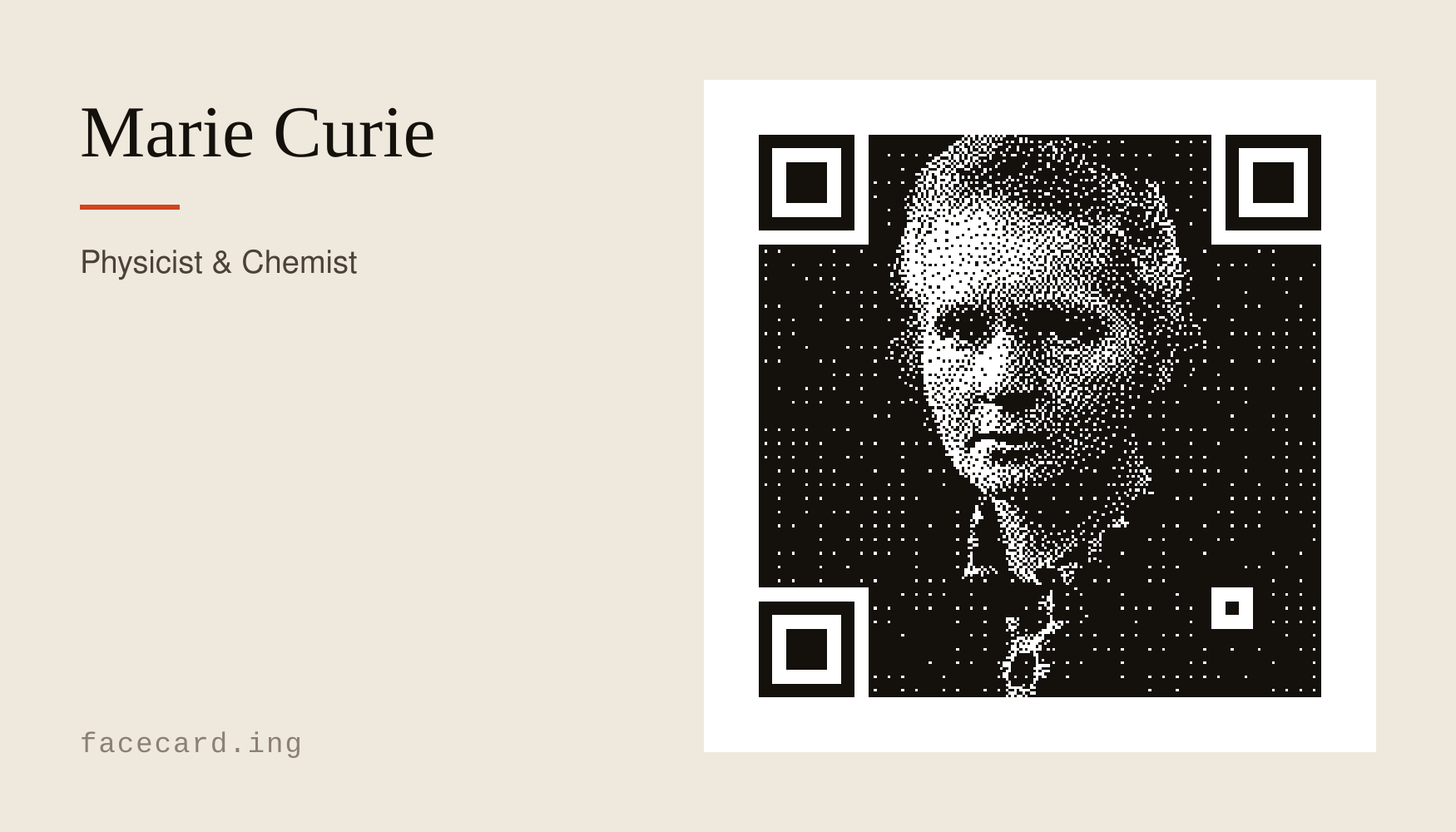
Marie Curie, set into a business card. Stucki dithering, error correction level H.Public domain, c. 1920 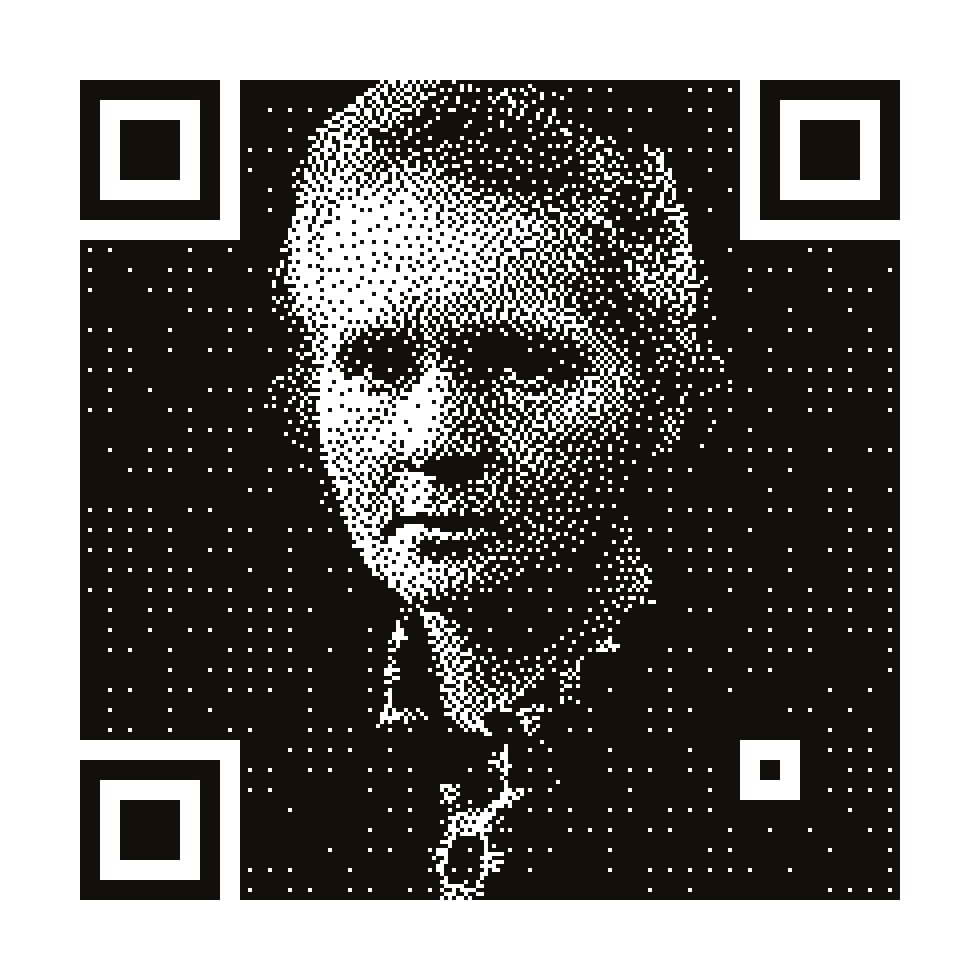
Marie Curie, dithered into a version 6 QR code with Stucki error diffusion at correction level H.Public domain, c. 1920 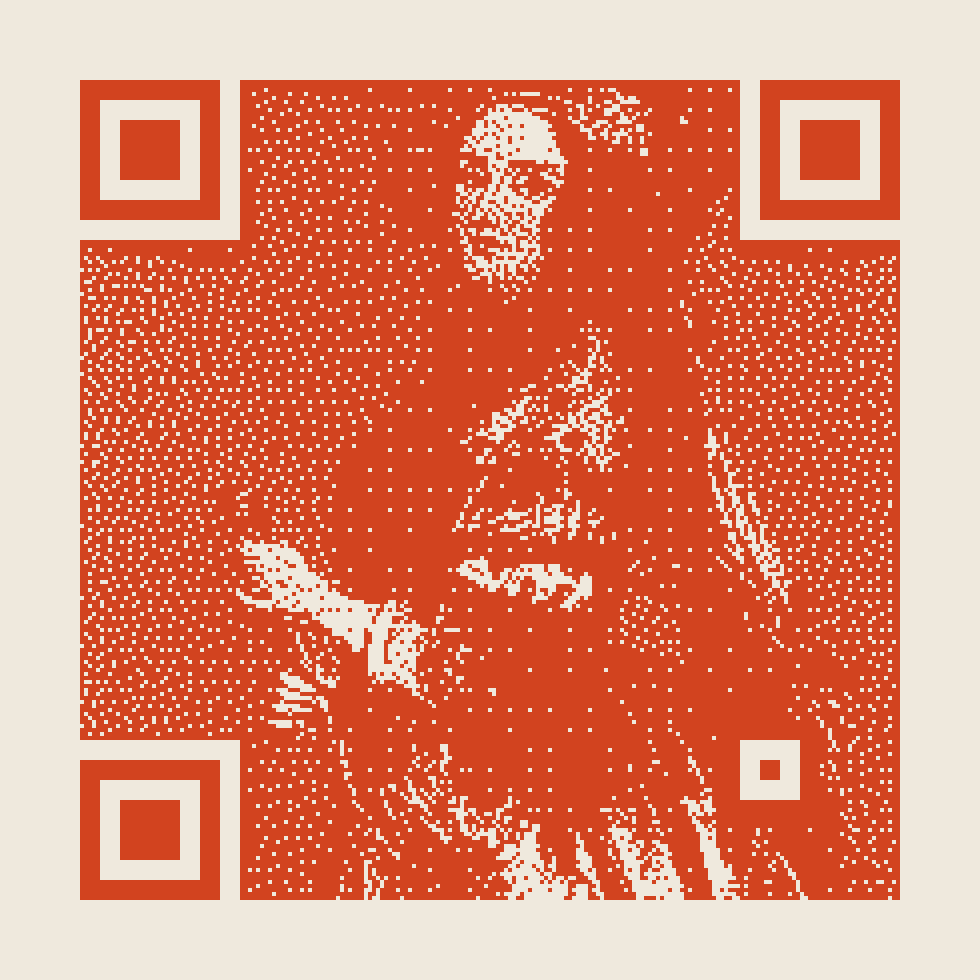
Ada Lovelace, dithered into a version 6 QR code with Jarvis–Judice–Ninke error diffusion at correction level H.Public domain, 1840 portrait 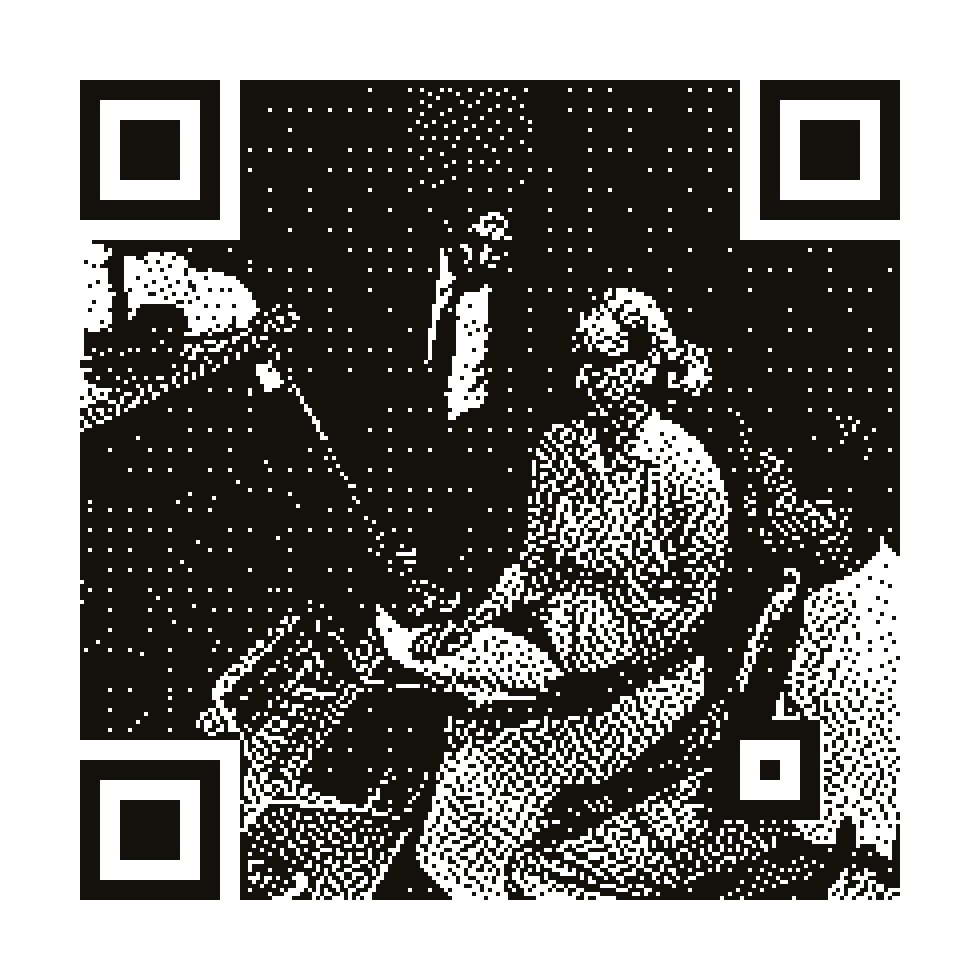
Grace Hopper, dithered into a version 6 QR code with Atkinson error diffusion at correction level H.Public domain, US Navy
Why these scan
A QR code reserves up to thirty percent of itself for error correction, and a scanner samples near the centre of each module rather than reading the whole square. Hold those centres to their true value, hand the margins to an error-diffusion dither, and the picture and the payload can occupy the same pixels. The full explanation is here.